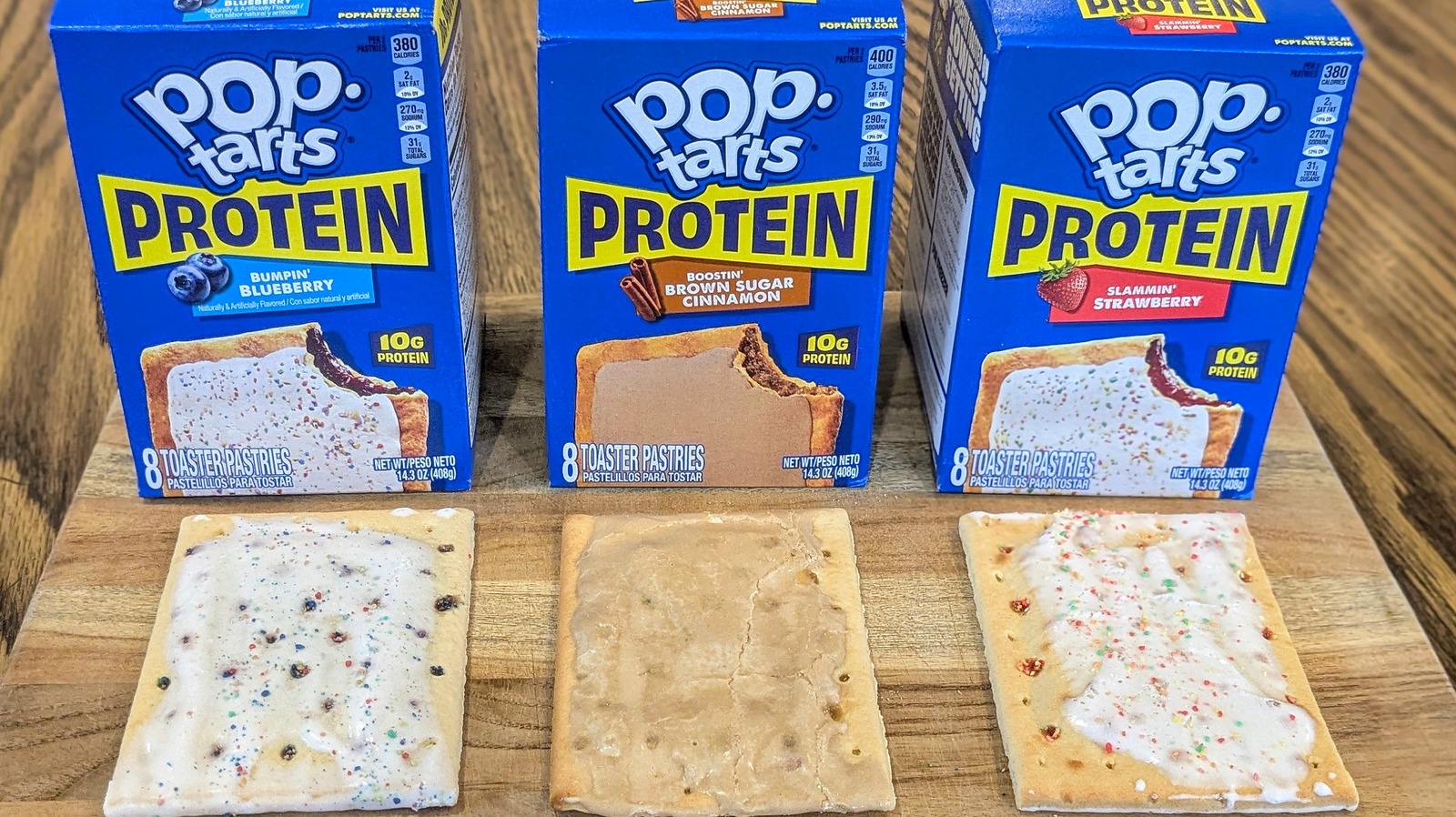
I have been standing in front of the granola bars for what must be eleven minutes. I am receiving a message. PROTEIN, the box says, and I understand—though I cannot say how—that it is saying this to me specifically, that the letters have swelled to this size because they needed to reach me. (This is what the psychiatrists call delusion of reference; but is it a delusion if the box really is addressing me? If the entire apparatus of food manufacturing and package design has organized itself around this moment of communication?) The protein knows I am here.
I walk the aisles. The word is everywhere. PROTEIN on the frozen waffles in a font so thick and squat it looks like it has been working out. PROTEIN on the cereal boxes, white against purple, black against yellow, always in a banner or shield or circle, always cordoned off in its own zone of the packaging as if requiring protection. PROTEIN on the cookies, on the chips, in the soda, on the Pop-Tarts box—in letters larger than "Pop-Tarts" itself, language finally larger than the thing it supposedly describes. (What have I to do with protein Pop-Tarts? And yet I cannot look away.) The food is a vessel. If the protein could arrive without the Pop-Tart it would, materializing directly in my bloodstream through sheer force of typography.
Ten grams. The number floats in its own little circle on the box, a halo, a merit badge. Ten grams is about what one would get from an egg and a half, but the egg has never required its own graphic design budget and focus grouping. The egg sits in its shell, containing its protein in silence. The Pop-Tart is broadcasting.
I move to the refrigerated section. Protein yogurt. Protein milk. Protein cottage cheese, which has always been mostly protein, but which now has more, and says so, in case I was worried, in case I thought the cottage cheese was holding out on me. There is a conspiracy of withholding that the new products have come to correct. The food I grew up with was keeping secrets. The food I grew up with had protein all along but never told me, never centered it, never put it in Impact and all caps. Bold on the front of the package where I could see it and feel its heft. Now the protein is confessing. Now the protein wants me to know. I'm being gang-stalked by protein.
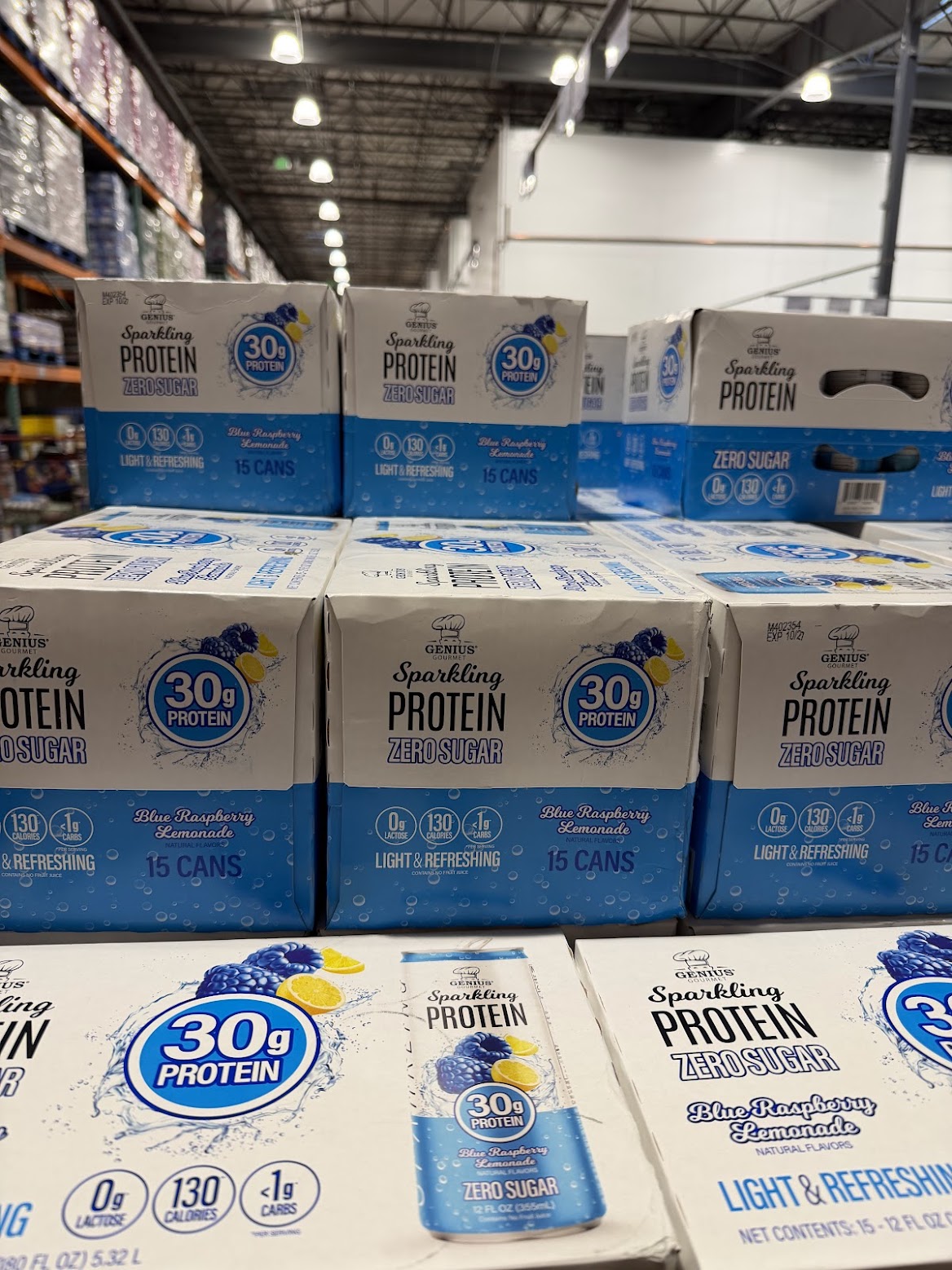
I pick up a box of protein pancake mix and study it. The letters are enormous. They have a pressure to them, a swollenness, the visual equivalent of a muscle pumped full of blood after a working set. There is something about the size that seems to demand admiration, that wants to be looked at the way a flexed bicep wants to be looked at (the same unembarrassed insistence, the same swelling toward the eye). Mishima wrote about the bodybuilder's muscles as a kind of speech, a rhetoric of the flesh, and here the rhetoric has migrated onto the cardboard, the box itself becoming the body, the typography becoming the physique. The pancake mix wants me to see how big its letters are. The pancake mix has been training for this.
Protein is the building block. This is what they told me in ninth grade biology and this is what the boxes are telling me now. Proteins are the workers, the structural elements, the enzymes that catalyze every reaction that keeps me alive. My muscles are protein. My hair is protein. The hemoglobin shuttling oxygen through my blood is protein. To eat protein is to eat the stuff of life itself, the very material of body, and to eat more protein is to become more body, more life, more material. The logic is sympathetic, almost magical: consume the building block and you will be built. Consume the muscle and you will become muscular. This is the same logic that had ancient warriors eating the hearts of their enemies, the same logic that sells collagen supplements to people who want better skin. I have absorbed this logic so completely I no longer experience it as logic at all. It is just the air. It is just what food means now.
The psychotic subject lives in a world of total meaning. Every license plate is a message, every stranger's cough is a signal, every cloud formation is a communication from some organizing intelligence.
The psychotic subject lives in a world of total meaning. Every license plate is a message, every stranger's cough is a signal, every cloud formation is a communication from some organizing intelligence that has taken an interest in his case. There is no noise in psychosis, only signal. And here in the grocery store something similar has happened: every box has something to say, every package is demanding attention, every product is insisting on its relevance to the project of self-optimization that I did not know I had undertaken until the boxes told me I had. I did not ask to be recruited. I did not ask to be watched. But the protein saw me coming. The protein has been waiting.
What is the protein actually doing in there? (The psychotic subject does not ask what the messages mean; they know what the messages mean. The meaning is the arrival, the fact of being addressed.) Still, if I were to ask: the protein is being hydrolyzed and extruded and reconstituted into forms that bear no relationship to its origins. Whey from cheese production, dried and powdered and added to batter. Pea protein isolate, stripped of everything that made it a pea and rebuilt as a kind of nutritional cement.
Is the protein in the Pop-Tart the same as the protein in the egg? The biology here is half clear. Is it a "complete protein," which means a protein source containing all nine essential amino acids in sufficient ratios—the ones my body cannot synthesize and must obtain from food? Eggs are complete. Chicken is complete. Whey is complete. But pea protein is not, not on its own, and neither is rice protein, and so the boxes that contain these isolates must combine them, must blend pea and rice in specific ratios to achieve completeness, to pass the test that the egg passes effortlessly by virtue of having once been intended to build a chicken.
The body does not eat single foods in isolation. The body eats meals, and across meals the amino acids combine and complement, the lysine I missed at breakfast arriving at lunch, the methionine gap filled by dinner. The distinction between complete and incomplete matters on the level of the isolated ingredient and dissolves on the level of the day. So which level is real?
+ + +
This is the epistemological murk that protein inhabits now, the swamp where biology and bro science have become indistinguishable, where real studies and Instagram infographics make the same claims in the same fonts, where someone is always telling me that everything I know is wrong. The egg is good (part of a complete breakfast). The egg is bad (it has too much cholesterol). The egg is good again (you need to meet your macros). Soy protein feminizes men, or it doesn't, or it depends on the isoflavone content, or the studies were funded by the dairy industry, or the debunking of the studies was funded by the soy industry. I cannot find the ground. If I just consume enough of the building block I will be built, regardless of which building block it is, regardless of completeness, regardless of bioavailability—which is to say nobody knows anymore, which is to say the protein has become psychotic too.
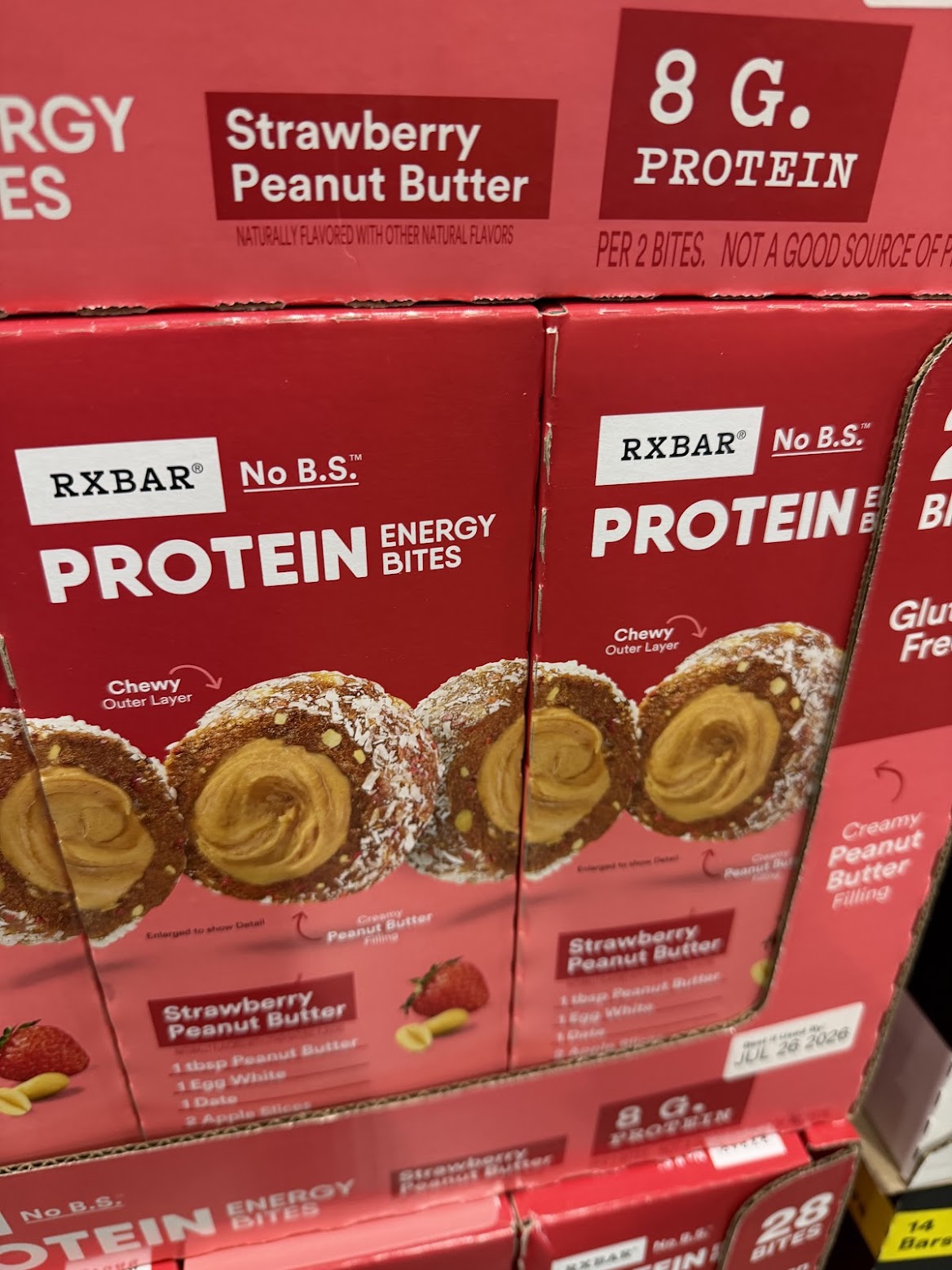
Protein is clay. Unlike carbohydrates and fats, which have relatively fixed textural properties, protein can be isolated, extruded, texturized, shaped into nearly anything. Whey becomes powder becomes shake becomes bar becomes structural scaffolding that holds its shape in my hand. Pea protein, soy isolate, hydrolyzed collagen—these are sculptural materials, infinitely malleable, capable of being worked into whatever form the market demands. The chiseled abdomen as aesthetic ideal finds its correlate here: protein is the raw material for chiseling, the substance from which definition is carved.
There is an arms race happening on the shelves. Ten grams was enough last year, but this year there are boxes boasting twelve, fifteen, twenty. The numbers climb. The letters swell. Each box must be louder than the box beside it, must out-protein the competition, must take up more visual space or risk being ignored, risk being passed over, risk being just food. I feel this escalation in my chest. I am being asked to optimize. I am being asked to build. The boxes have a vision for me.
I leave the store with a basket full of protein. At home I will eat these foods and I will become more protein than I was before. This is what I want. This is what the letters promised.